
LATEST NEWS AND UPDATES
Unlock your professional potential with Pro Insights!
Why Website Structure Is Costing You Growth

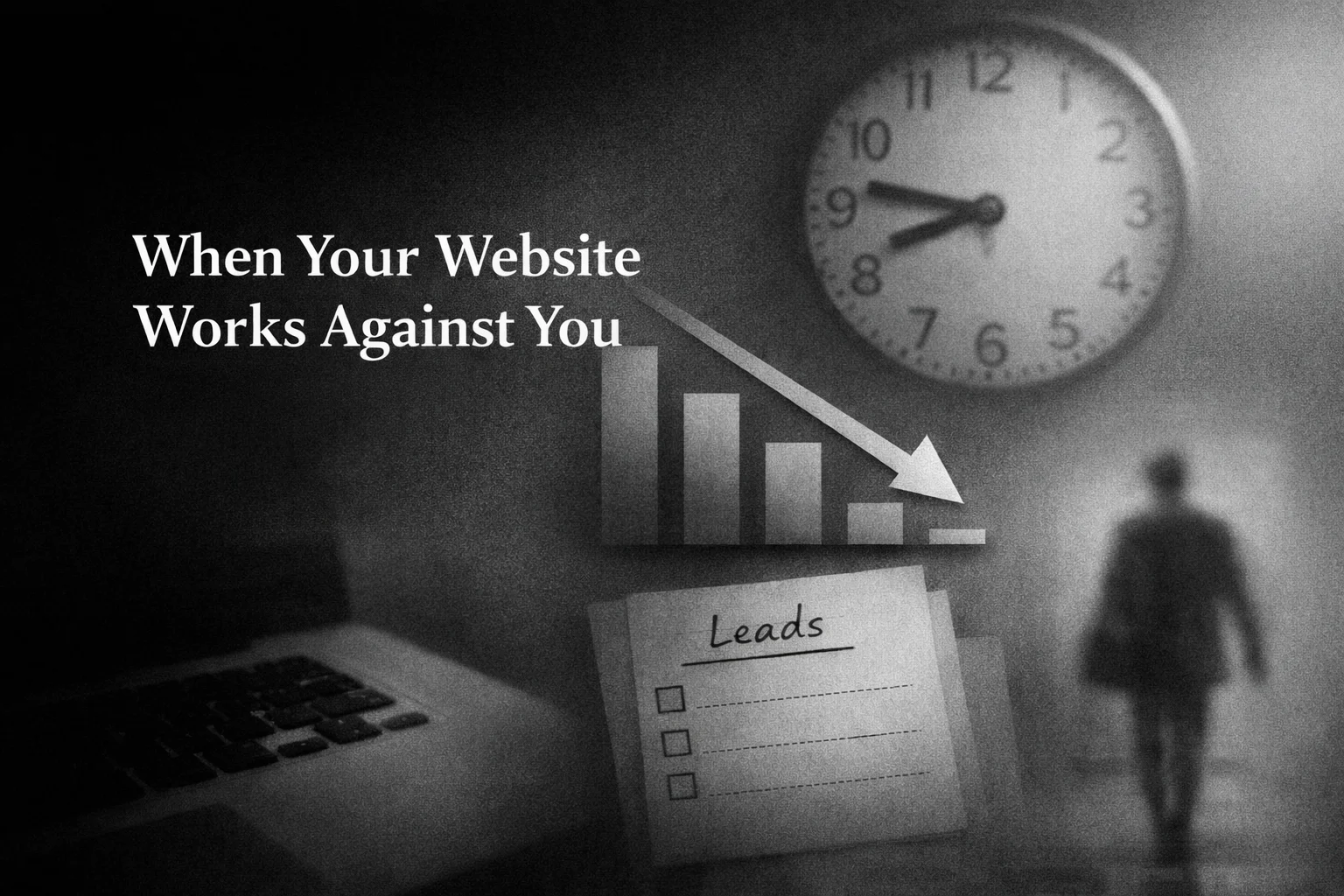
Most businesses won’t see what their website cost them this year.
Not on an invoice.
In missed opportunities.
In lost trust.
In conversations that never started.
Because websites don’t usually fail dramatically.
They fail silently.
By the time the problem is obvious, the damage is already done.
The same pattern appears in branding: the most expensive mistakes only become clear once momentum slows.
Your Website Is Never Neutral
Many businesses treat their website as a digital placeholder.
Something that simply exists.
In reality, it is doing far more than that.
Your website is often:
-
The first judgment
-
The credibility filter
-
The stand-in decision-maker
-
The moment people decide whether you’re worth their time
If it wasn’t doing its job this year, it wasn’t harmless.
It was working against you.
Where the Real Cost Hides
Lost Trust You Never See
Visitors don’t announce when they hesitate.
If your website feels outdated, unclear, or inconsistent, they pause — briefly — and leave.
No feedback.
No complaint.
Just silence.
And you never know how many potential clients decided you weren’t credible enough to continue.
Enquiries That Never Happened
A website without structure doesn’t guide people.
It makes them work.
If visitors had to:
-
Figure out what you actually do
-
Guess where to go next
-
Search for basic information
Many didn’t bother.
That’s not a traffic problem.
It’s a clarity problem.
Time Spent Explaining What Your Website Should Have Said
If you regularly explain:
-
What your business really does
-
Who your services are for
-
Why you’re different
Your website isn’t carrying its share of the load.
A functioning website pre-qualifies, sets expectations, and filters before a conversation begins.
Anything less adds friction to every interaction.
Opportunities Lost to “Safer-Looking” Businesses
People judge capability through presentation.
Even strong businesses lose ground when their website:
-
Lowers perceived value
-
Makes competitors feel more established
-
Signals risk instead of confidence
Not because the work isn’t good —
but because the decision environment isn’t.
First impressions decide whether people stay, engage, or leave. Research from the Nielsen Norman Group consistently shows that users form credibility judgments in seconds — often before engaging with content in depth.
Why This Becomes Clear at Year-End
December exposes patterns.
Questions start surfacing:
-
Why were leads inconsistent?
-
Why did growth feel harder than expected?
-
Why did everything require so much effort?
Often, the issue isn’t effort.
It’s infrastructure.
And your website is a core part of that system.
What Needs Attention Before the Next Year Starts
This isn’t about a full rebuild.
It’s about clarity.
Ask:
-
Can someone understand what we do in seconds?
-
Do we look credible next to competitors?
-
Is there a clear path from interest to action?
-
Does the website support growth — or slow it down?
If the answers are vague, that’s the signal.
Clarity doesn’t come from adding more pages.
It comes from deciding what matters — and structuring around that.
How We Think About Structure And Clarity
A Website Should Reduce Friction — Not Create It
A website that works properly:
-
Establishes trust immediately
-
Reinforces your positioning
-
Converts attention into intent
-
Makes decisions easier
Most importantly, it stops costing you quietly.
Your website is not decoration.
It’s part of how your business decides, communicates, and grows.
If it isn’t doing that, it isn’t neutral.